
Last updated November 25, 2026
 Sweep & inspection
 Caps & crowns
 Flue relining
 Masonry repair
 Gas fireplace service
Level 1 sweep and inspection to the NFPA 211 annual standard - flue, crown, cap, and flashing checked and photographed
Chimney sweep logs do not sweep chimneys. They loosen some creosote - which then falls where a brush and vacuum still have to collect it.
Chimney Sweep Maintenance Checklist for South Buffalo Homeowners
Most chimney advice you’ll find online is a seasonal reminder dressed up as expertise: schedule your sweep, they say, and everything else will sort itself out. That’s not a maintenance standard, it’s a reminder to make a phone call. The truth is that a chimney fails at specific points, and in South Buffalo those points have names. This guide gives you a component-by-component checklist you can hold a contractor accountable to, item by item, from the crown at the top of the stack to the firebox at the bottom. You’ll learn what each part does, what to look for from ground level before anyone arrives, and what a proper written report should confirm when the work is done.
Quick Answer
A proper chimney maintenance checklist for a South Buffalo home covers seven components in order: crown, cap, flashing, liner, smoke chamber, damper, and firebox. Each item should be checked during a single visit, and the contractor should leave you a written report confirming what was inspected, what was found, and what needs attention now versus what can safely wait. You can verify the exterior items from the ground before the appointment, and keeping those notes year-over-year is the simplest way to spot freeze-thaw deterioration before it becomes a rebuild.
Styles & brands we work with
- Sweep & inspection
- Caps & crowns
- Flue relining
- Masonry repair
- Gas fireplace service
Table of Contents
- Why South Buffalo Climate Drives Chimney Failure
- What You Can Check From Ground Level
- Crown and Cap: Where Water Gets In
- Flashing: The Roof-Chimney Joint
- The Liner: Protecting the Flue Wall
- Smoke Chamber, Damper, and Firebox
- Documenting Condition Year-Over-Year
- What a Written Post-Service Report Should Confirm
Why South Buffalo Climate Drives Chimney Failure
South Buffalo sits in a lake-effect weather zone. That means repeated wide swings between freezing and thawing through the colder months, and masonry hates that cycle. Brick is porous. When moisture soaks into the brick face and mortar, then freezes, it expands with real force. When it thaws, it contracts. Do that dozens of times in a winter and the surface begins to flake away. That’s spalling, and it’s the single most common exterior problem we see on chimneys in South Buffalo.
The result is a predictable arc of deterioration. You’ll usually see it in this order:
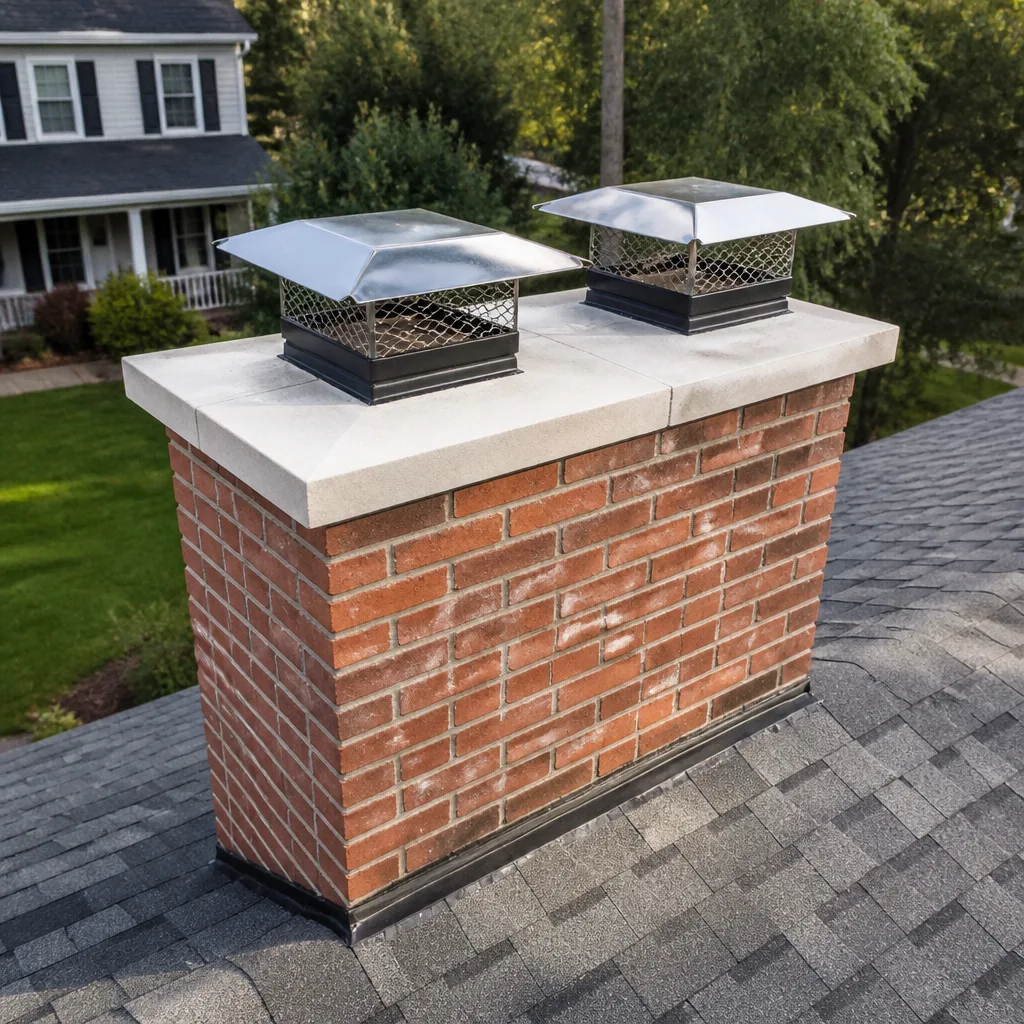
- Efflorescence first. A white, chalky staining on the brick face means moisture is moving through the masonry and leaving mineral deposits behind as it dries. It’s not damage itself, it’s a signal that water is finding a way in.
- Mortar joint erosion next. The joints between bricks are softer than the brick itself and weather first. Recessed or crumbling joints let more water in and speed up the cycle.
- Spalling faces after that. Brick faces begin popping and flaking, and once they do the chimney loses surface material permanently.
The timeline isn’t fixed. A chimney with a sound crown and a working cap can go years with only cosmetic efflorescence. A chimney with a cracked crown and an open flue can move from efflorescence to spalling in a couple of winters. The point is that in South Buffalo, chimney condition is mostly a water story, and almost everything on this checklist is ultimately about keeping water out. That’s why an annual inspection here should be treated as a water-intrusion review as much as a creosote review.
What You Can Check From Ground Level Before the Contractor Arrives
You can’t inspect a flue from the yard, but you can document the exterior condition well enough to have a real conversation when the technician arrives. In our experience, the homeowners who get the most out of a visit are the ones who’ve taken a few photos before booking. Here’s what to look at.
- Stand back and look at the whole stack. Use binoculars or your phone’s zoom. Is the chimney leaning, or straight? Is there any obvious brick missing at the top?
- Check the crown. The crown is the concrete or masonry slab that caps the top of the chimney. Look for visible cracks, crumbling edges, or pieces missing entirely.
- Check the cap. Is there a cap at all? Is it rusted, bent, or missing a mesh screen on any side?
- Look at the flashing. That’s the metal at the base of the chimney where it meets the roof. Look for lifted edges, rust holes, or gaps where water could get behind it.
- Scan the brick for white staining. Efflorescence is easy to spot from the ground, even at a distance.
- Look at the mortar joints. On the chimney’s sunny side, are the joints recessed, crumbling, or missing in patches?
Write the date and take those same photos each year from the same spot. A single photo tells you what’s there now. Two photos a year apart tell you what’s getting worse and how fast. For more on what a technician checks during the service itself, see our page on chimney sweep work in South Buffalo.
Crown and Cap: Where Water Gets In
The crown and the cap are two different parts, and both matter. The crown is the concrete or masonry slab that sits on top of the chimney, pitched slightly so water runs off. The cap is the cover over the flue opening itself, usually metal with a mesh screen. Together, they’re the first line of defense against everything below them.
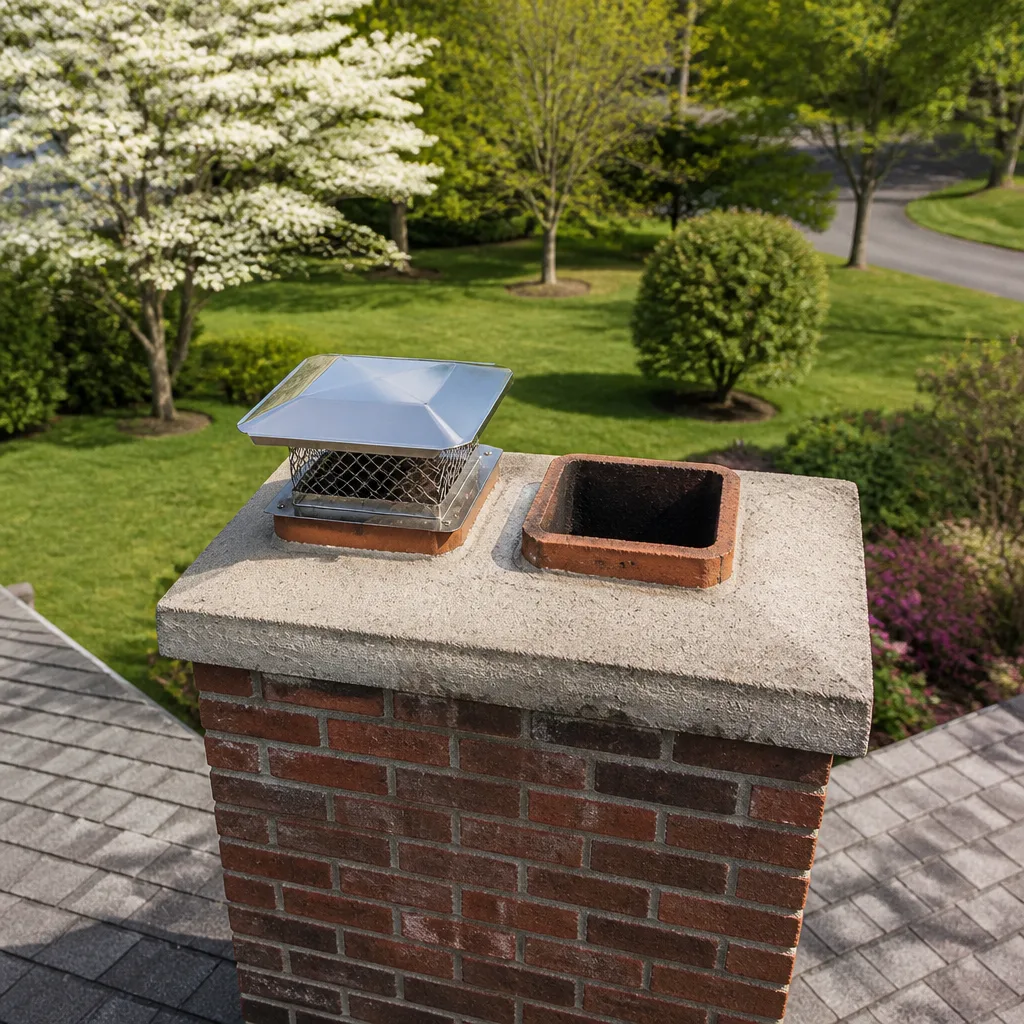
A cracked crown lets water soak directly into the top of the masonry, and in South Buffalo that water finishes the job at freeze-up. Small hairline cracks are common and worth watching. Cracks you can fit a coin into, or sections that have begun to break away, let a lot more water through. The common fix is to grind out the damaged crown and repour it, or to coat a sound but cracked crown with a flexible waterproof coating. That’s a routine part of chimney cap & crown work and usually a same-visit fix during an inspection.
The cap plays a different role. An uncapped flue lets in rain, snow, and nesting birds and squirrels. It also lets sparks land on the roof. A cap with a damaged screen is nearly as bad as no cap. What to check:
- The crown should be intact, evenly pitched, and free of cracks that reach the flue.
- The cap should be securely attached, rust-free, and screened on all four sides.
- The cap’s fit should be sized to the flue and vented correctly for a gas appliance, if you have one.
Flashing: The Roof-Chimney Joint
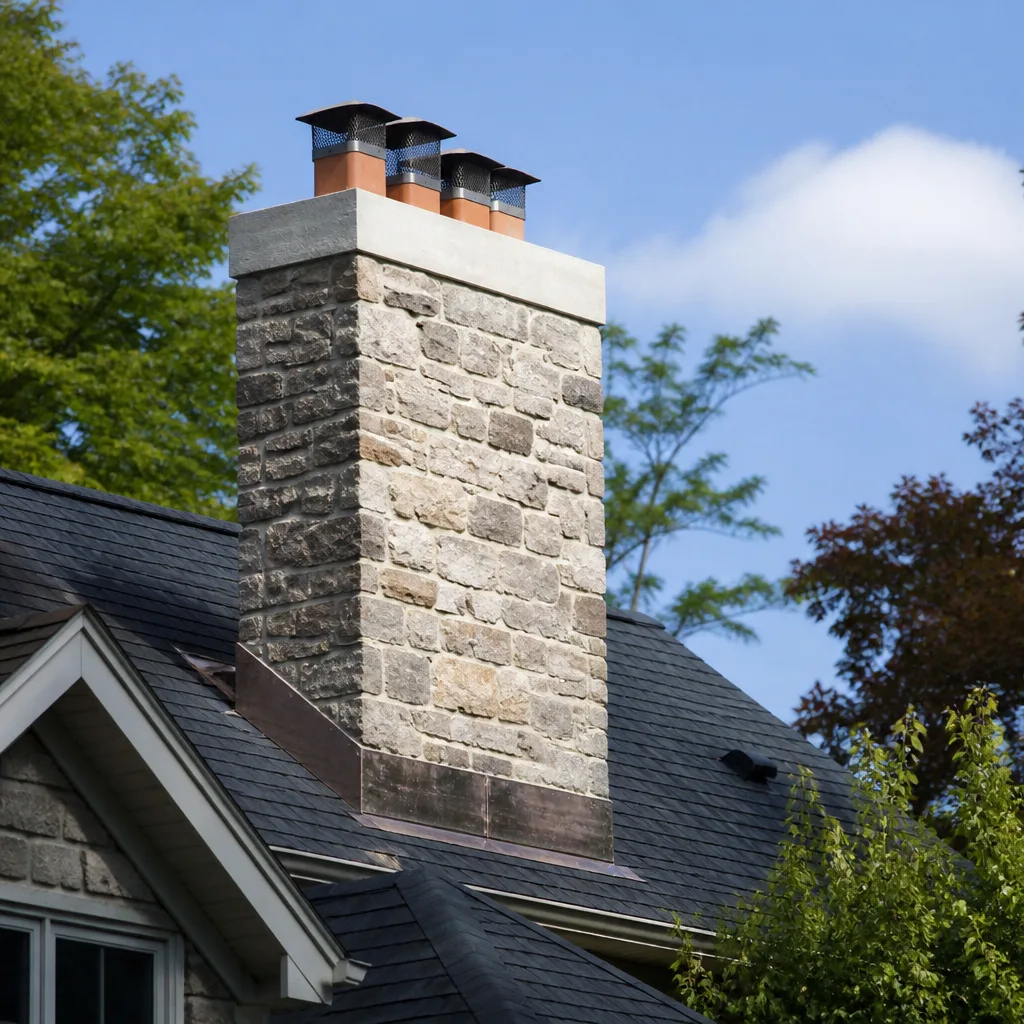
Flashing is the metal that seals the gap where the chimney comes through the roof, and it’s the most commonly overlooked item on the checklist. Chimneys in South Buffalo’s older housing stock frequently have flashing that was installed decades ago and has quietly failed. It doesn’t usually fail dramatically. It lifts at a corner, or rusts through at a seam, and water gets behind it and runs down into the roof deck and attic.
What to check and what a technician should confirm:
- Base flashing at the roof line is sealed with no lifted edges and no rust-through.
- Step flashing on the sloped sides is layered correctly over the roof shingles, not under them at the wrong point.
- Counter-flashing is set into the masonry joints, not just caulked over the surface.
- The sealant is intact; old caulk that’s dried and pulled away should be replaced rather than simply recaulked over.
Flashing problems are hard to see from the ground and easy to miss from the roof if a contractor only looks at the flue. Ask directly whether flashing was checked. It’s a fair question and a good workman will answer it clearly.
The Liner: Protecting the Flue Wall
The liner is the liner inside the chimney that contains heat and byproducts of combustion and keeps them away from the masonry. A damaged liner is the single most serious defect in a chimney system, because it means flue gases and creosote can reach the structure and the surrounding home. A metal liner also stops leaks into neighboring flues in a shared chimney, which is a common layout in older South Buffalo homes with more than one hearth.
This is the part of the checklist that usually needs camera work, and it’s the reason we open the inspection with direct advice: no recommendation from us is made without camera evidence you can see for yourself. A technician should run a camera down the flue, show you the footage, and walk you through what you’re looking at.
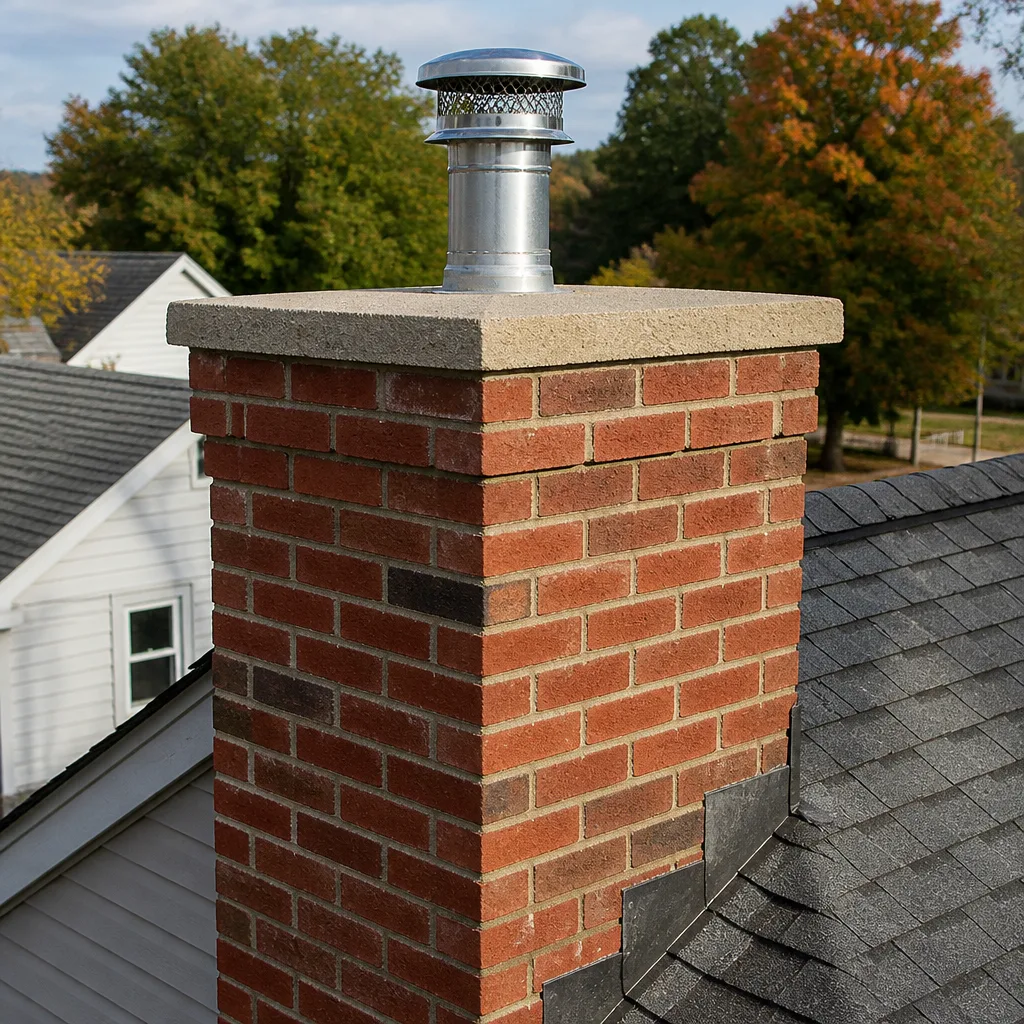
When the liner is damaged, the fix is a flexible liner system. We use DuraFlex, which suits the older and irregular flue profiles you find in aging residential housing. When the flue is sound enough that a full reline isn’t necessary, a ceramic resurfacing method called HeatShield can restore a deteriorated liner from the inside, without a full rebuild. That’s a specialized process, and it’s worth asking specifically whether it applies to your flue rather than assuming the answer is a full rebuild. The bottom line: a liner problem is real, but the fix isn’t always the biggest one on the table.
Smoke Chamber, Damper, and Firebox
The smoke chamber, damper, and firebox are the interior parts of the checklist that a homeowner can’t verify alone, but they should still appear in the report. The smoke chamber is the space above the damper where smoke collects and funnels up the flue. In older chimneys, that space can have rough, stepped surfaces that slow smoke down and collect creosote. When it’s badly deteriorated, those surfaces need smoothing before the chimney draws properly.
The damper is the metal plate that opens and closes the flue, and the firebox is the brick or masonry chamber where the fire burns. What a technician should check:
- Damper operation. It should open fully, close completely, and sit square in its frame.
- Firebox brickwork. Look for crumbling brick, gaps between the firebox and the surrounding structure, and loose mortar.
- Firebox floor and walls. Sound brick and intact mortar joints, with no cracks that reach through to the surrounding structure.
- Smoke chamber surfaces. Any rough, stepped, or damaged surfaces should be noted and discussed.
Firebox repair is often worth doing simply because it’s cheaper than a rebuild and stops the damage from spreading. Whatever a technician finds here, you should get it in writing, with a photo, before you agree to anything.
Documenting Condition Year-Over-Year
Tracking chimney condition over several years is the best thing you can do for your chimney and your wallet. A single inspection gives you a snapshot. A folder of reports gives you a trend, and the trend is what tells you whether the mortar joints are holding steady or wearing faster than they should. For a South Buffalo chimney fighting freeze-thaw, a trend is worth more than any single visit.
What to keep:
- A dated photo of the exterior, taken from the same spot each year. Same angle, same distance, so you can compare.
- Your written post-service report from each inspection. File them together.
- A photo of any damage that was flagged, so you can compare it year to year. A crack that hasn’t grown is a watch item; one that has grown is a fix.
- A note of any repairs completed and the date, so you know what’s new and what’s original.
Keep it in one place. A phone folder labelled “chimney” is enough. When you call us or any other chimney professional, mention that you have prior photos and reports; a good technician will want to see them, because it saves everyone time and makes the recommendation easier to defend.
What a Written Post-Service Report Should Confirm
A written report is the difference between a chimney that gets maintained and one that gets guessed at. The report should identify each component that was checked, describe its condition, and separate what needs attention now from what can safely wait. If you get a verbal summary and a bill, ask for the written report before you pay. A fair company won’t mind.
The report should confirm that each of these was checked:
- The crown, the cap, and the flashing, with a note of condition and any repair needed.
- The liner, inspected by camera, with footage you were shown.
- The smoke chamber, damper, and firebox, with a note of condition.
- The presence and extent of creosote, and what stage it was.
- The flue’s draft and any obstruction found.
- A clear statement of what can wait, so you’re not deciding between doing everything today and doing nothing.
If you don’t receive a report, ask for one in writing and keep following up until it arrives. If a company can’t produce it, that tells you something about how the next visit will go. Our chimney repair service begins with that written report, because the diagnosis and the fix should come from the same place.
Common Mistakes to Avoid
- Skipping the inspection because the sweep seemed fine. A clean flue and a sound crown are separate questions. A sweep can leave you with a spotless flue and a crown that’s ready to crack next winter. Ask for the inspection on its own.
- Ignoring efflorescence because it brushes off. It comes back because the water keeps moving through. Treat white staining as a prompt to check the crown and cap, not a cosmetic detail.
- Assuming the flashing is fine because there’s no visible leak inside. Water often travels far from where it enters. Flashing that’s failed at one corner can show up as a stained attic sheathing feet away. Have it checked directly.
- Letting a company recommend a full reline without a camera. A liner problem is real, but the size of the fix should be backed by footage you’ve seen. Ask to be shown.
- Re-caulking over old flashing instead of replacing the metal. New caulk over dried-out sealant and rusted metal simply delays the leak. Replace the metal when it’s failed.
- Not keeping the annual report. A report lost to a drawer is a report you can’t compare to next year’s. File it with your photos.
- Hiring a sweep-only operation for a repair problem. A crew equipped to sweep but not to diagnose will either walk away from a real defect or hand you off to someone else. One inspection for the whole system is what you want.
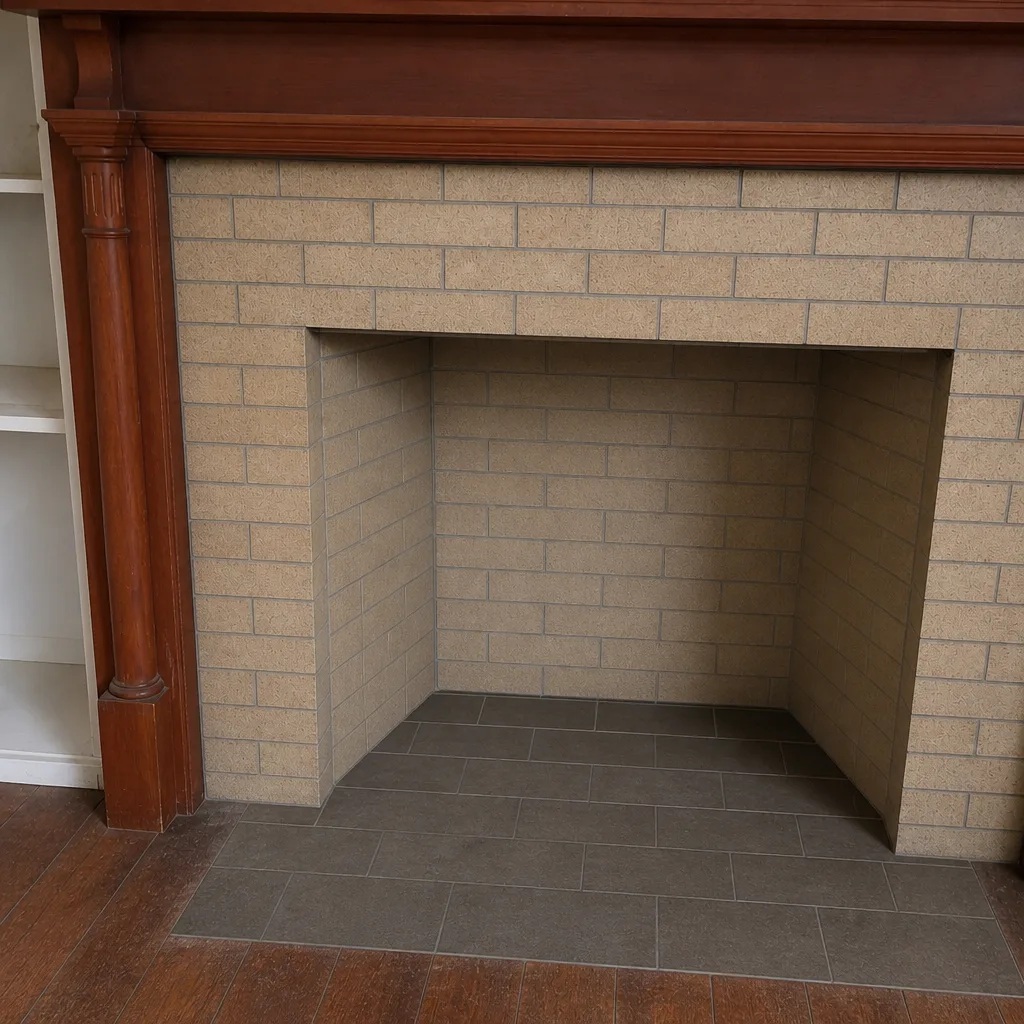
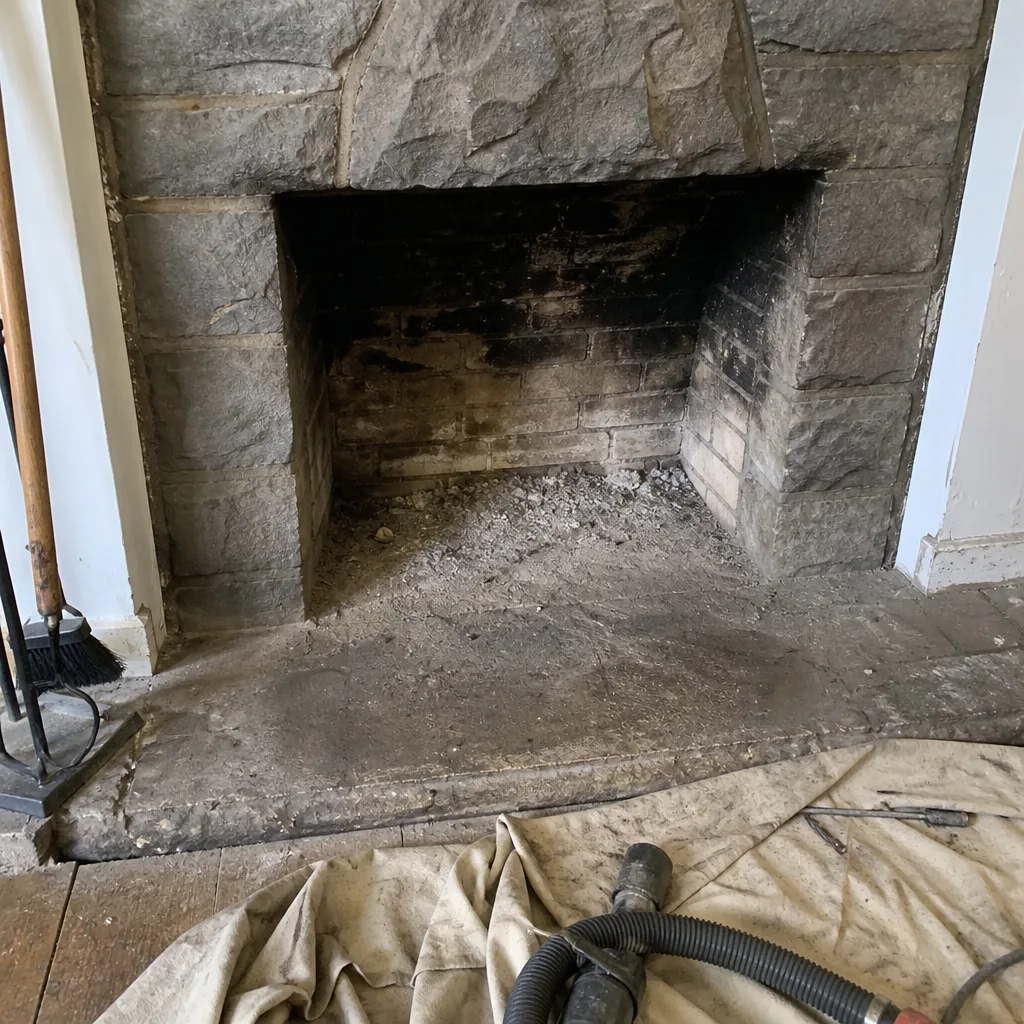
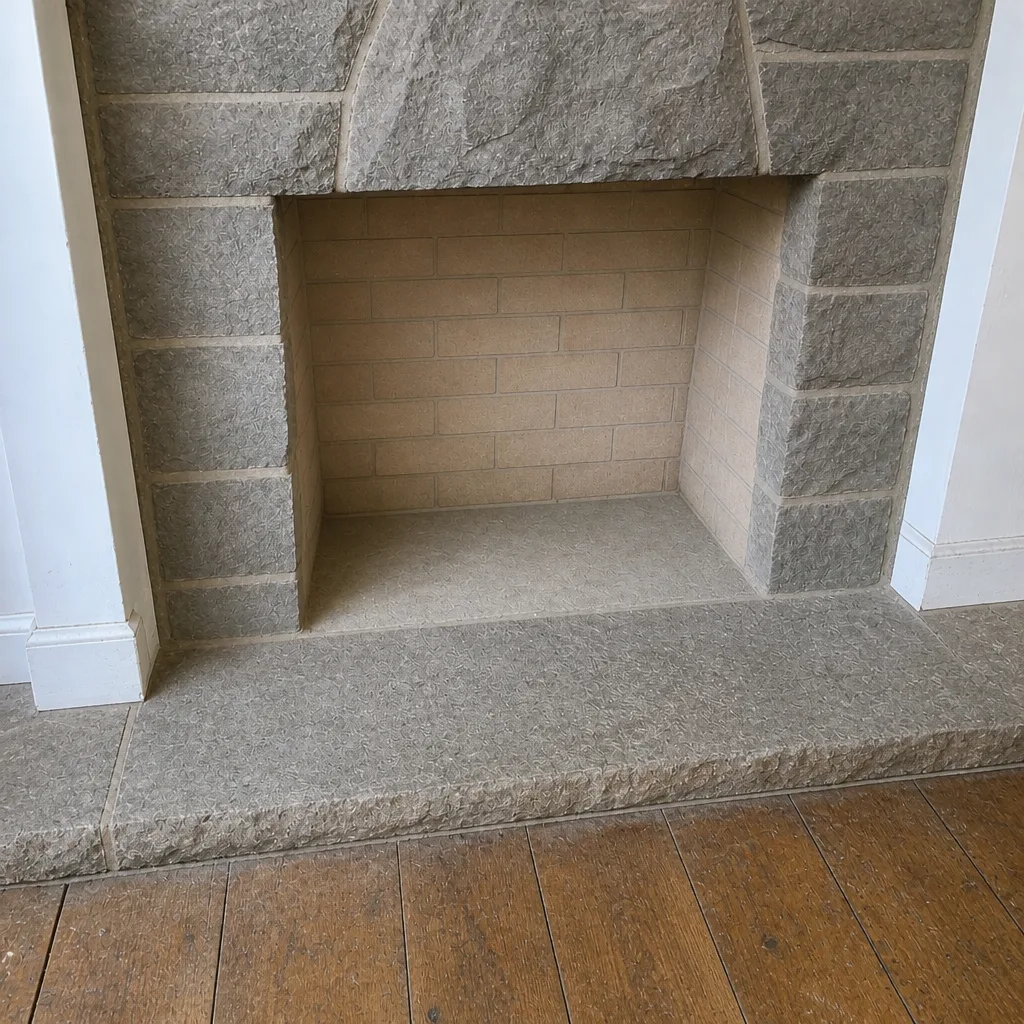
See the difference
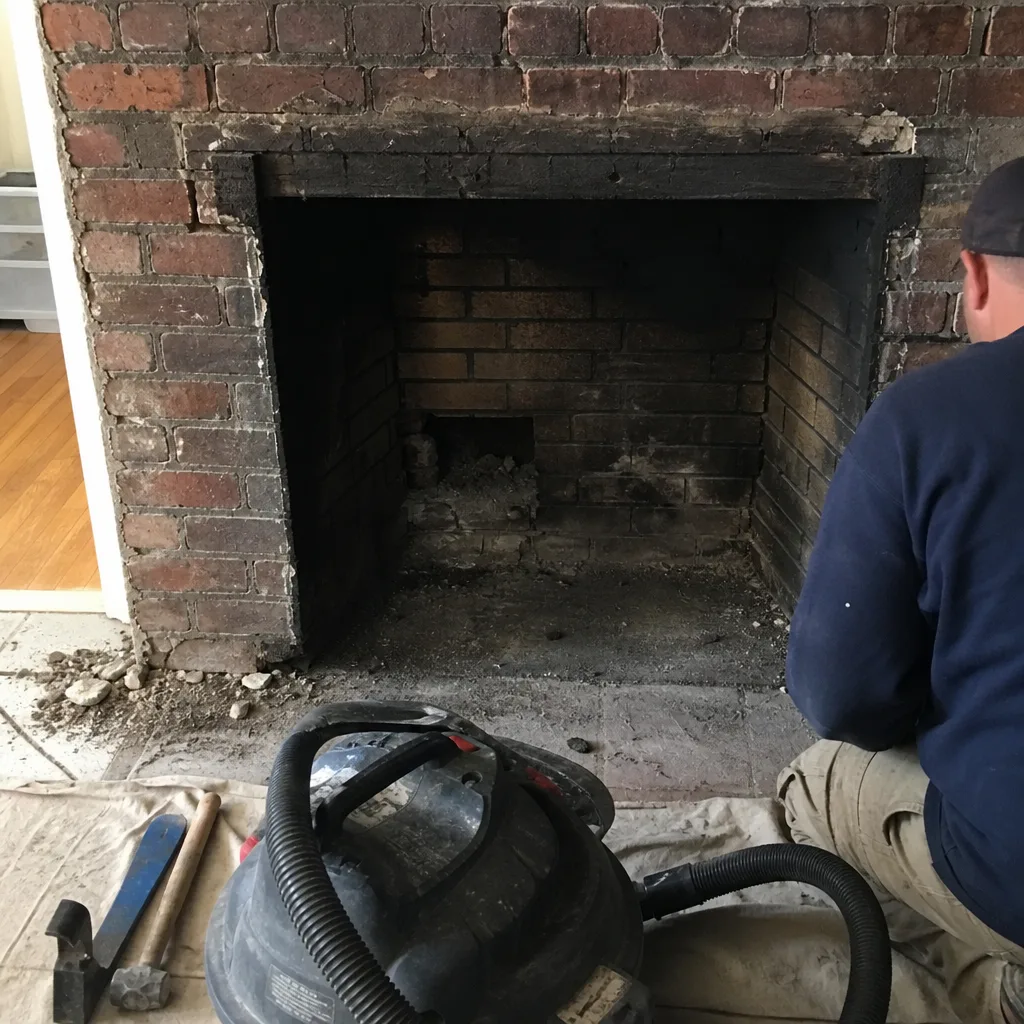 Before
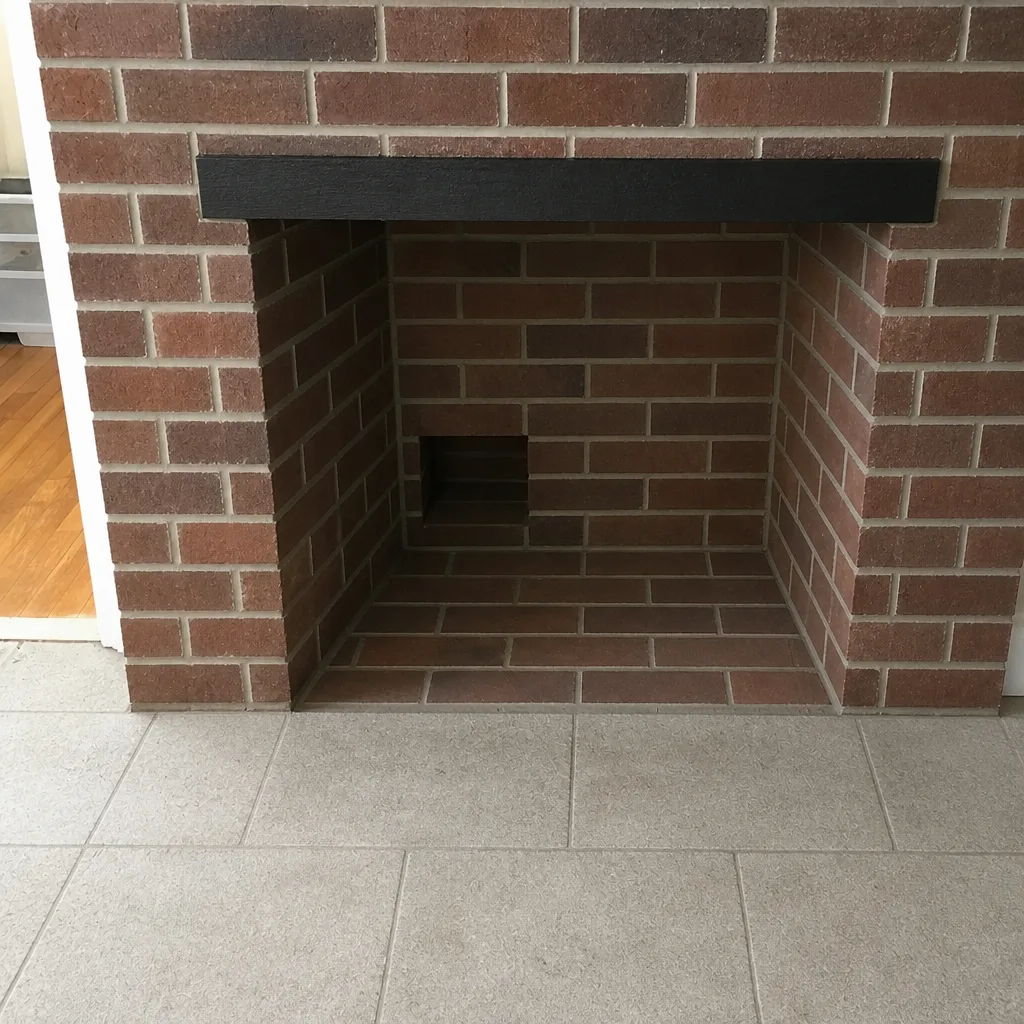 After
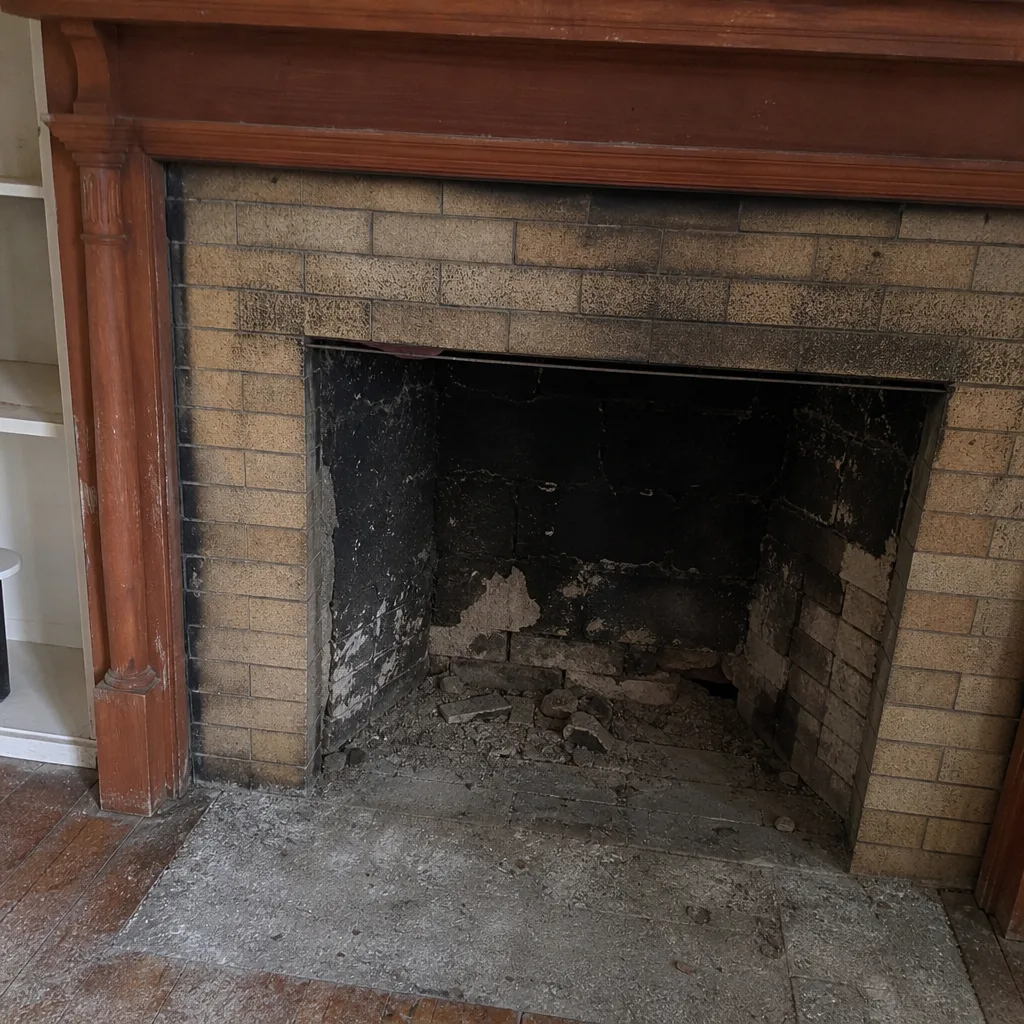 Before
 After
 Before
 After
When to Call a Professional
Call a professional if you find cracks in the crown you can fit a coin into, if flashing has lifted at a corner, if you see spalling on the brick face, or if any part of the checklist above comes back unresolved. Call before your first fire of the season rather than after, since a problem found early is usually a repair, while the same problem found in the middle of winter can force you to shut down the hearth. The chimney is a system, and a single inspection can cover all seven components at once. Call us if you want a written assessment you can act on and keep. Chimney Sweep South Buffalo offers free estimates in South Buffalo. Call (855) 337-1696.
Frequently Asked Questions
Once a year for most wood-burning fireplaces, and always before the season’s first fire if you didn’t have it done the year before. The annual visit should include an inspection of all seven components on this checklist, not just the flue.
Spalling brick from freeze-thaw cycling, efflorescence staining, and mortar joint erosion top the list, because South Buffalo’s lake-effect swings between freezing and thawing work the masonry hard. A cracked crown, failed flashing, and a damaged liner are the most common defects found during inspection.
You can check the crown, cap, flashing, and brick from the ground with binoculars or a zoomed photo, and you should. You cannot check the liner, smoke chamber, damper, or firebox. Photograph the exterior and take those photos to the inspection.
Not always. A damaged liner needs attention, but the right fix depends on the condition of the flue. A flexible DuraFlex liner and a HeatShield ceramic resurfacing solve different problems, and the recommendation should come with camera footage you’ve seen yourself. Call (855) 337-1696 for a free estimate if you want a second look.
It should confirm the condition of the crown, cap, flashing, liner, smoke chamber, damper, and firebox, based on a camera inspection of the liner, with creosote levels noted and a clear statement of what can safely wait. If you don’t get one, ask for it in writing.
We are closed Saturday and open Sunday through Friday, 7am to 7pm, so book within that window. The phone line is different: We answer 24/7. A call outside dispatch hours is booked into the next opening, Sunday through Friday, 7am to 7pm. Call (855) 337-1696 for a free estimate.
The Bottom Line
A chimney checklist is only useful if it names the parts and tells you what to look for. In South Buffalo, that means treating the whole system as a water-management problem, because freeze-thaw is what drives the deterioration. Check the crown, cap, flashing, liner, smoke chamber, damper, and firebox every year. Photograph the exterior from the ground and keep the photos with your written report. Ask for camera footage before you accept a recommendation for a liner replacement. Use the seven-component standard above to judge the contractor who inspects your chimney. And if the report is thin or missing, ask for it in writing.
Our technicians have up to 8 years of experience. We work with professional-grade brands including DuraFlex, HeatShield, Gelco, Olympia Chimney, Famco, and Copperfield, and we name the materials we use because we chose them for the job. We sweep, inspect, repair, cap, and fix fireplaces, so one inspection and one call cover the whole system. Call (855) 337-1696. We answer 24/7. Fast dispatch, 7am-7pm, Sunday through Friday. We are closed Saturday.
Written by the team at Chimney Sweep South Buffalo.